
 EN
EN
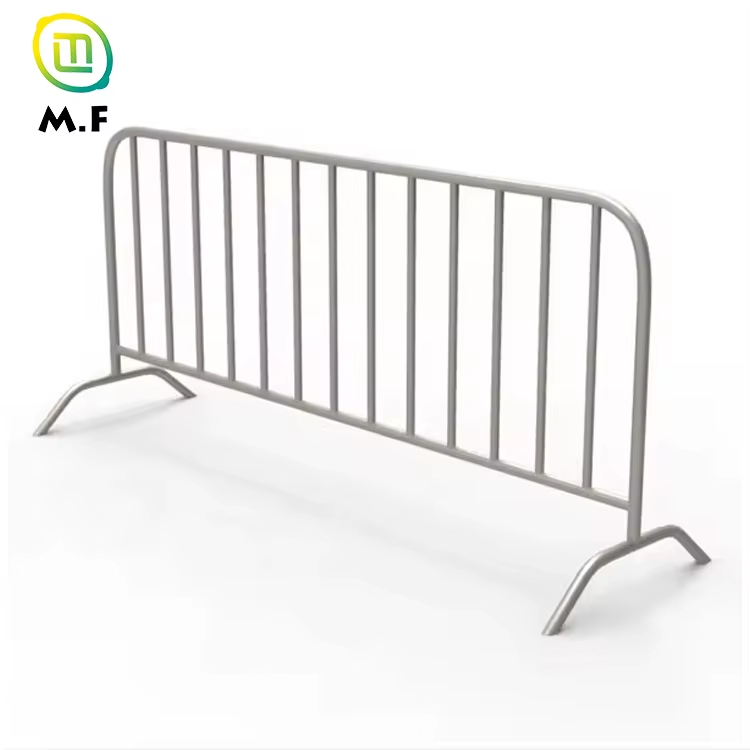
Stack and Store: Efficient Metal Barricade Management for Event Companies and Rental Fleets
An event rental company maintaining a fleet of hundreds or thousands of metal barricades faces a logistics challenge that directly affects profitability: how to store the barriers when they are not in use, and how to load and unload them efficiently between events. A barricade fleet that is stored haphazardly consumes three times the warehouse space, takes twice as long to load for deployment, and sustains more handling damage — bent pickets, chipped powder coating, rust at contact points — than a fleet stored with a disciplined stacking and storage system.
Metal barricades are designed to stack, and the stacking method is not arbitrary — it is determined by the barrier's frame geometry. The most common crowd control barricade design uses an inverted-T or A-frame profile with a vertical front face, angled rear support legs, and a flat base that allows the barriers to be nested together when stood vertically or stacked horizontally in uniform layers. The right method depends on the available warehouse footprint, the frequency of deployment, and whether the barriers are transported in dedicated stillages or loaded loose into trucks.
Vertical vs. Horizontal Stacking
Vertical Nesting: The Space-Saving Method
When barricades are stood upright and nested face-to-face in an alternating pattern — the front face of one barrier against the rear legs of the next — a stack of ten barriers occupies roughly the same floor area as two barriers side by side. This method maximizes warehouse density and keeps each barrier accessible for individual removal without disturbing the rest of the stack. The nesting relies on the frame geometry: the angle of the rear support legs creates a natural pocket that the next barrier's front frame slots into.
The limitation of vertical nesting is stack stability. A tall nest of barriers (more than 15–20 units deep) becomes top-heavy and can topple if bumped by a forklift or if the floor is uneven. Restraining straps or wall-mounted safety rails at the top of the stack prevent this. Hebei Maifa Metal Products' barricades, with their standard dimensions of approximately 1.1 m height × 2.1 m width and 25 mm OD frame tubes, nest efficiently thanks to the consistent frame geometry produced by the company's automated welding and powder-coating production lines at its 133,200-square-meter Hengshui facility.
Horizontal Stacking: The Transport Method
For loading onto trucks or into shipping containers, barricades are stacked horizontally in uniform orientation — all facing the same direction — with each layer separated by a thin protective material (cardboard sheet or foam strip) to prevent the powder-coated surfaces from scratching each other during transport vibration. A stack of 20–30 barriers forms a stable rectangular block that can be strapped together and lifted as a unit with a forklift. The stack height is limited by the container or truck interior height, not by the barriers' structural capacity — the steel frames easily support the weight of 20+ barriers without deformation.
Rust Prevention During Storage
Galvanized and powder-coated barricades resist corrosion during outdoor use, but storage conditions affect their long-term appearance and structural integrity. Barricades stored in direct contact with concrete floors in unheated warehouses accumulate condensation at the contact points — the concrete stays colder than the air, and moisture condenses on the steel surface where it touches the floor. Placing barriers on wooden pallets or plastic feet eliminates this ground-contact condensation and extends the cosmetic life of the powder coating by preventing the rust staining that appears at the base of improperly stored barriers.
Frequently Asked Questions
How many barricades can be stacked safely?
Horizontal stacks of 20–30 barriers are stable when the barriers are of uniform dimensions and the stack is strapped together. Vertical nesting should not exceed 15–20 barriers deep without top-restraint strapping. Hebei Maifa's barricades are manufactured with consistent frame geometry that enables predictable, stable stacking.
What is the best way to move stacked barricades?
For horizontal stacks, a forklift with padded forks lifts the strapped stack as a unit. For vertical nests, a barricade cart — a wheeled frame with vertical posts that the nested barriers slide onto — allows a single worker to move 10–15 barriers at once without lifting. Purpose-built barricade carts pay for themselves quickly in reduced labor time for event setup and teardown.
How should barricades be cleaned before storage?
Pressure-wash with water to remove mud, beverage residue, and surface dirt. Allow barriers to dry completely before stacking — trapped moisture between nested barriers promotes rust at the contact points even on galvanized surfaces. For heavily soiled barriers from construction sites, a mild detergent wash removes the abrasive grit that scratches powder coating during stacking.
Can barricades be stored outdoors?
Galvanized and powder-coated barricades tolerate outdoor storage, but the cosmetic life of the powder coating is reduced by continuous UV exposure and rain. For rental fleets where appearance matters (concert and festival barriers that face the audience), indoor or covered storage is recommended. For construction-site barriers where appearance is secondary, outdoor storage is standard practice.
How are damaged barricades identified during storage?
Inspect each barrier as it comes off the truck after an event — bent pickets, cracked welds, and missing connection hooks are the most common damage. Tag damaged barriers with colored tape and segregate them for repair rather than returning them to the general inventory. A small repair station with a welder and touch-up paint keeps the fleet in service with minimal out-of-rotation time.
What accessories improve barricade storage efficiency?
Barricade carts for vertical nesting, pallet frames for horizontal stacking, wall-mounted safety rails for tall vertical nests, and warehouse racking with labeled bays for different barrier types all improve storage density and retrieval speed. Hebei Maifa provides storage recommendations with barrier fleet purchases and can advise on cart and racking specifications compatible with their barrier dimensions.