
 EN
EN
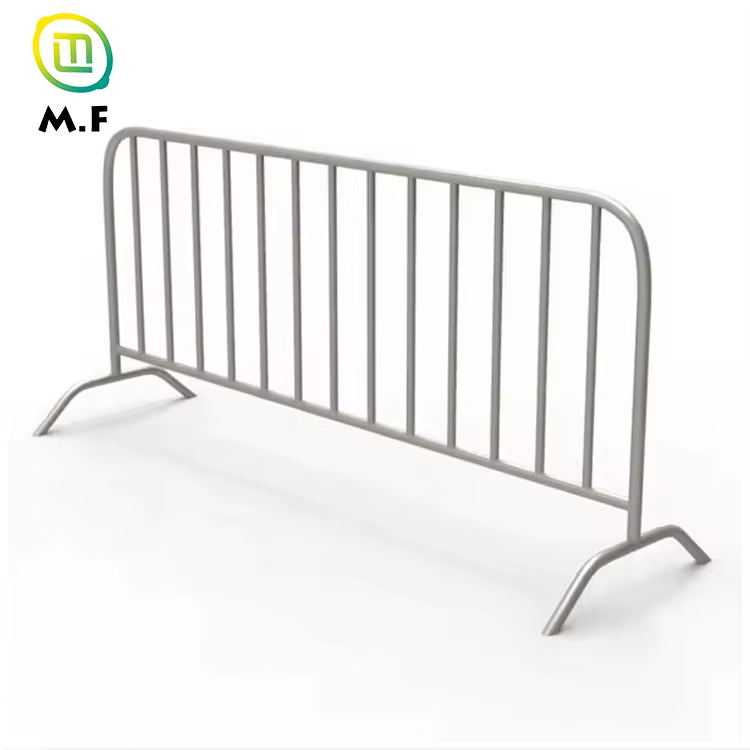
The Barrier That Holds: How Heavy-Duty Metal Barricades Resist the Forces They Were Built to Stop
A crowd of several thousand concertgoers surges forward as the headliner takes the stage. The barricade at the front of the standing section absorbs the collective pressure of bodies pushing from behind — a distributed load that can exceed a ton of force across a 2-meter barrier section when crowd density reaches 4–5 people per square meter. The barricade does not crumple, slide, or tip. It transfers the force through its frame into the ground and into the adjacent barrier sections linked on either side, creating a continuous line of resistance that distributes the crowd pressure along the entire barrier perimeter rather than concentrating it at any single point.
Heavy-duty barricades resist impact and sustained pressure through three engineering features working together: material strength (the steel alloy and wall thickness of the frame tubes), structural geometry (the shape and bracing that determines how force travels through the barrier), and connection design (the inter-barrier linking mechanism that turns individual barriers into a unified system). A barricade that fails in any one of these three areas fails as a whole — regardless of how strong the other two might be.
The Three Pillars of Barricade Impact Resistance
Material Strength: What the Barrier Is Made Of
The frame of a heavy-duty metal barricade is constructed from galvanized steel tube — typically Q235-grade structural steel with a yield strength of approximately 235 MPa. The tube diameter and wall thickness determine the frame's resistance to bending under load. A 25 mm outer-diameter tube with a 1.5 mm wall thickness provides an optimal balance of strength and weight for pedestrian crowd control applications. Thicker walls increase impact resistance but also increase weight, making the barrier harder for event crews to handle manually.
Hebei Maifa Metal Products Co., Ltd. manufactures its crowd control barricades using Q235 galvanized steel tube with dimensions of 25 mm outer diameter for the frame and 16 mm for the infill pickets. The standard barrier dimensions — approximately 1.1 meters in height and 2.1 meters in width — provide a barrier height that prevents climbing while maintaining sightlines for crowd monitoring. The galvanized finish provides the corrosion resistance necessary for both indoor event use and outdoor construction-site deployment.
Structural Geometry: The Shape That Redirects Force
A barricade's ability to resist impact depends on how its frame converts horizontal force into vertical load transfer to the ground. The traditional A-frame or inverted-T geometry used in pedestrian barriers channels crowd pressure down through the angled rear support legs, which push into the ground rather than sliding backward. The wider the base footprint relative to the barrier height, the more stable the barrier is against tipping — the base should extend at least 50–60% of the barrier height behind the front face for adequate stability under crowd loading.
Connection Design: Stronger Together
Individual barricade sections linked by hook-and-eye connections or interlocking pins form a continuous barrier line that distributes impact force across multiple sections. A force applied to one barrier is shared with the barriers on either side through the connections, reducing the load on any single section by 30–50% compared to a standalone barrier. The connection must be strong enough to transfer load without disengaging — hook-and-eye designs that interlock under tension are the industry standard precisely because they tighten rather than separate when the barrier line is pushed.
Frequently Asked Questions
How much force can a heavy-duty barricade withstand?
A properly manufactured Q235 galvanized steel barricade with a 25 mm frame tube can withstand distributed crowd pressures of approximately 500–700 kg per linear meter before structural deformation begins. The actual failure point depends on the specific tube dimensions, the support-leg geometry, and whether the barrier is linked into a continuous line. Hebei Maifa's barricades are engineered for the demanding conditions of concert, festival, and construction-site crowd management.
What is the difference between crowd control barricades and construction barricades?
Crowd control barricades prioritize visibility (open-frame design), portability (light enough for manual handling), and interlocking capability for continuous barrier lines. Construction barricades prioritize impact resistance from vehicles and falling debris, with heavier construction, larger footplates, and higher visibility markings. Maifa manufactures both types from Q235 galvanized steel for corrosion resistance.
How are barricade connections designed to hold under pressure?
Hook-and-eye connections on opposite sides of each barrier frame link adjacent sections. When crowd pressure pushes against the barrier line, the hooks pull against the eyes, tightening the connection rather than separating it. This self-tightening mechanism is why properly linked barriers form a stronger continuous line than individual barriers placed side by side without connection.
Can heavy-duty barricades be used on uneven ground?
Barricades with flat base feet or adjustable footplates accommodate moderate ground unevenness. For significantly sloped or soft ground (grass, gravel), additional stabilization — ground stakes driven through the footplate holes, or sandbags placed on the rear support legs — prevents sliding and tipping under crowd load.
What is the standard height for crowd control barricades?
The industry standard height is approximately 1.0–1.2 meters (39–47 inches), with Maifa's standard crowd control barrier measuring 1.1 meters. This height provides adequate crowd containment while allowing security personnel and event staff to see and communicate across the barrier line. Shorter barriers (0.9 m) are used for queue management; taller barriers (1.5+ m) are used for high-security perimeter applications.
How many barricades are needed for a typical event perimeter?
A 100-meter perimeter requires approximately 45–50 barricade sections at the standard 2.0–2.1 meter width, plus an allowance of 5–10% for gate sections, corner transitions, and emergency-access break points. Hebei Maifa provides quantity calculations and layout recommendations based on event site plans.