
 EN
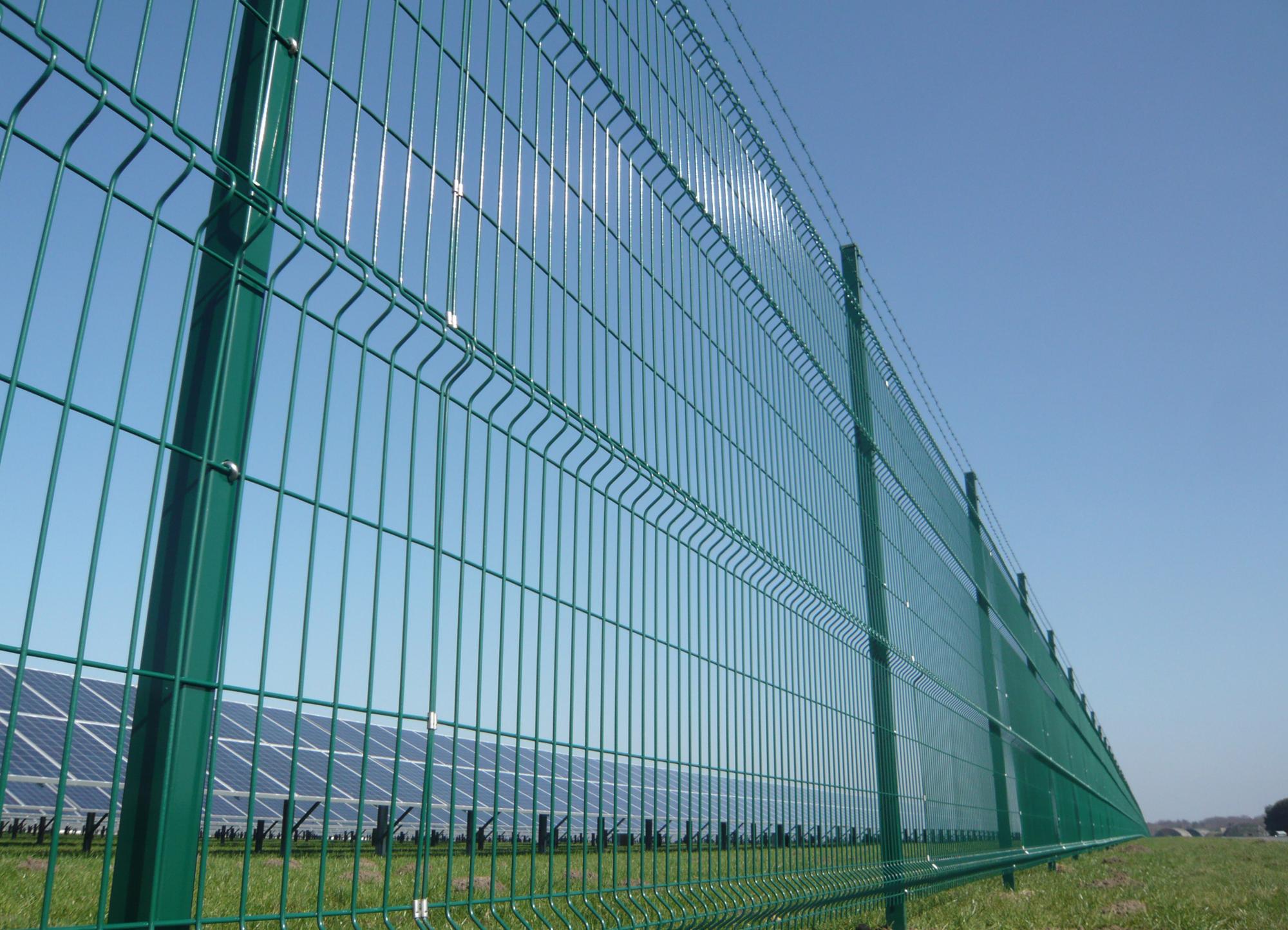
Top Verified Wholesale Sources for High-Strength Wire Mesh Fence
Wholesale procurement of high-strength wire mesh fence hinges on verified suppliers, clear compliance documentation, and realistic production terms. The three channels below compare global B2B platforms, regional manufacturers, and factory-direct or distributor purchasing—each with distinct trade-offs in control, speed, and assurance.
Global B2B Platforms with Pre-Vetted Suppliers (Alibaba, Made-in-China, ThomasNet)
Global B2B marketplaces offer the fastest way to compare wholesale suppliers of high-strength welded and woven mesh panels. Pre-vetted programs typically require factory audits, export history verification, and sample testing before granting a “verified” badge. Buyer protection tools often cover sample orders and initial container shipments—helping mitigate risk when sourcing from offshore suppliers.
However, listings frequently conflate commercial-grade galvanized mesh with true security-grade fabric. Always verify quotations against wire diameter, zinc coating mass, and tensile strength—not just panel dimensions. For 358 anti-climb or double-wire panels, require minimum Ø4.0 mm wire, 75 g/m² zinc coating, and third-party load test data aligned with ASTM F2927 or EN 10223.
Request mill test reports (MTRs) and ISO 9001 certification before issuing a deposit. Platform reviews can signal responsiveness, but factory video audits and references from clients in your target region carry greater weight. Some platforms display response rate and on-time delivery scores—but those reflect logistics, not tensile performance. Crucially, separate ornamental mesh from security-grade panels defined by verifiable wire tensile values. Shortlist two or three audited suppliers and compare identical specification sheets to ensure bids are truly comparable.
U.S. and EU-Based Manufacturers Offering ASTM-Compliant Wire Mesh Fence
U.S.- and EU-based manufacturers serve projects requiring ASTM, AAR, or EN compliance—and where traceable domestic supply is non-negotiable. These suppliers commonly stock standard-height security panels and can cut to length without container-level minimums. In North America, ASTM A970 (for steel wire) and A185 (for welded fabric) are frequent purchase-order requirements; EU mills typically certify to EN 10223 (tensile strength) and EN 10244 (coating standards).
Regional sourcing reduces ocean freight, customs delays, and supply chain volatility—making it ideal for public infrastructure or phased site expansion. Standard panel lead times range from 2–6 weeks; custom post spacing, powder coating, or integrated security toppings may extend that to 10–12 weeks. Prices run higher than offshore baselines, but compliance risk drops significantly.
Buyers should request a formal certificate of conformance (not just a certificate of analysis) and confirm galvanized coating mass meets project specs before shipment acceptance. For anti-cut or forced-entry-rated mesh—especially in public utility, data center, or government facilities—request a test summary to ASTM F2927 or the U.S. State Department’s forced-entry standard.
Factory Direct vs. Distributor: MOQ, Lead Time, and Customization Trade-offs
Factory-direct purchasing delivers the lowest unit cost and full control over specifications—but demands scale. Distributors offer speed and flexibility with local stock, though customization is limited to pre-engineered SKUs.
| Factor | Factory Direct | Distributor |
|---|---|---|
| MOQ | 200–500 panels or one full container | 10–50 panels or cut-to-order |
| Lead time | 20–45 days plus shipping | 2–10 days from local stock |
| Customization | Full control over wire diameter, opening, coating, and posts | Limited to stocked SKUs and minor changes |
| Quality documents | Direct MTRs and audit access | Supplier certificates may be one step removed |
Use factory direct when ordering exceeds one container—or when geometry, tensioning, or anchoring deviates from standard panels. Use a distributor when deadlines are tight, quantities are under 100 panels, or you need repeat drop-shipments for maintenance, repair, and operations (MRO). Distributors also simplify multi-site logistics through consolidated regional delivery. In both cases, lock coating mass, tensile strength, and dimensional tolerances into the purchase order—not just the spec sheet.
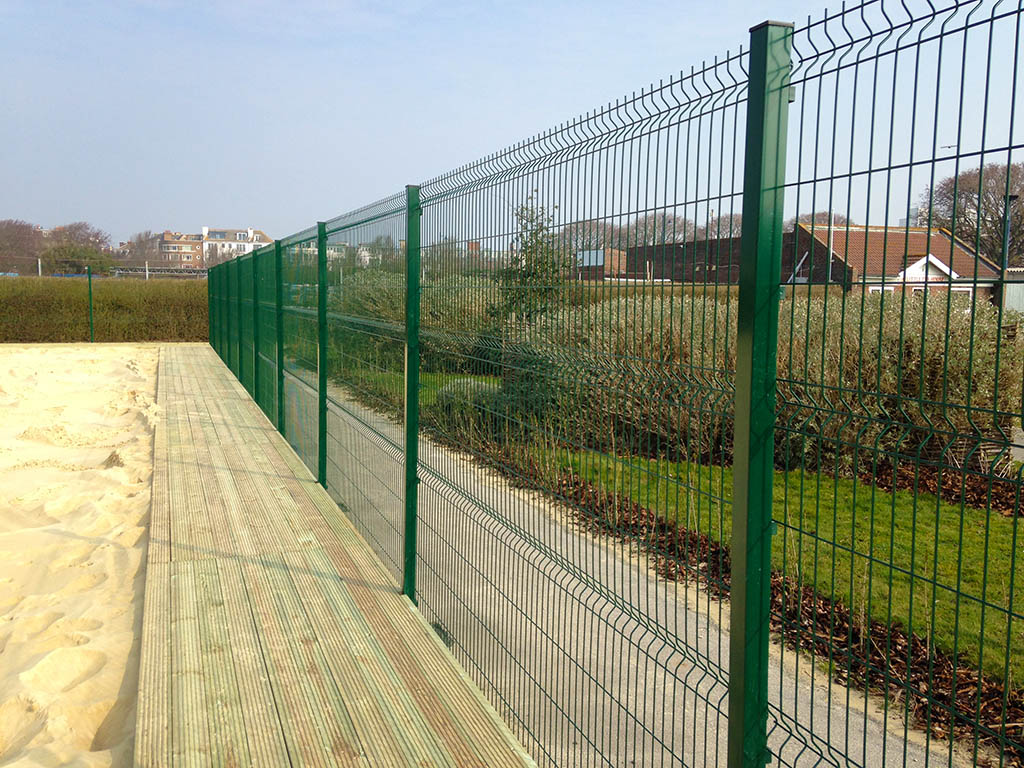
Material Selection for High-Strength Wire Mesh Fence
Choosing the right material directly impacts tensile capacity, corrosion life, and total ownership cost. ASTM International test methods provide objective benchmarks for comparison.
Stainless Steel vs. Galvanized Welded Mesh: Tensile Strength, Corrosion Resistance, and Lifecycle Cost
Stainless steel (typically 304 grade) welded mesh delivers tensile strength between 80,000–100,000 psi. Hot-dip galvanized welded mesh made from low-carbon steel ranges from 55,000–80,000 psi. Under ASTM B117 salt-spray testing, 304 stainless steel exceeds 5,000 hours before red rust appears; hot-dip galvanized mesh with an 85-micron zinc coating lasts about 2,000 hours.
This difference is decisive in coastal or industrial environments, where chloride exposure rapidly degrades zinc. In humid or marine settings, stainless steel’s higher upfront cost is often offset by decades of zero maintenance and no replacement cycles. Conversely, hot-dip galvanized mesh remains the pragmatic choice for inland agricultural, industrial, or municipal sites—where cathodic protection at cut edges extends service life without premium pricing.
| Parameter | 304 Stainless Steel Welded Mesh | Hot-Dip Galvanized Welded Mesh |
|---|---|---|
| Tensile strength | 80,000–100,000 psi | 55,000–80,000 psi |
| Salt-spray resistance | 5,000+ hours to red rust | ~2,000 hours to red rust |
| Initial cost | 2–3× baseline | Baseline |
| 20-year lifecycle cost | Often lower in aggressive environments | Higher if recoating or replacement is needed |
Specifiers must evaluate grade, coating thickness, and base wire diameter together—not material type alone. A poorly coated stainless mesh or undersized galvanized wire undermines performance regardless of nominal grade.
ASTM Standards Overview (A185, A496, A970, F2927) and Why They Matter for Wire Mesh Fence Performance
ASTM International publishes consensus standards that define minimum requirements for wire tensile strength, weld shear strength, coating weight, and dimensional tolerances. These standards create a level playing field for evaluation and enforcement:
- ASTM A185: Covers welded plain steel wire fabric—commonly referenced when mesh panels are cast into concrete footings.
- ASTM A496: Applies to deformed steel wire, used for high-bond anchor wire or embedded fence sections.
- ASTM A970: Specifies headed steel reinforcing bars, critical for post-anchoring connections subject to lateral loads.
- ASTM F2927: The only fence-specific standard for welded wire mesh fabric with metallic or polymer coatings—defining minimum tensile strength, weld integrity, and coating adhesion.
Procuring to ASTM standards reduces the risk of substandard wire diameter, weak welds, or insufficient zinc coating. It enables consistent third-party inspection and simplifies supplier comparisons across geographies. Most importantly, adherence signals engineering intent—not just commercial convenience.
Matching Wire Mesh Fence Strength to Application Requirements
Security & Perimeter Fencing: Ballistic, Forced Entry, and Vandal-Resistant Specifications
High-security perimeters demand mesh engineered to resist cutting, climbing, and blunt-force attack. Welded mesh with narrow 12.7 mm × 76.2 mm openings and Ø4.00 mm vertical/horizontal wires denies footholds and impedes hand-tool penetration. Tensile strength is decisive: 8-gauge steel in 358 anti-climb mesh achieves ~47,000 psi yield strength—nearly double the 25,000 psi of common 11-gauge chain link (ASTM A641-23). This margin limits bending, warping, and deformation during attempted breach.
For ballistic or projectile resistance, high-tensile welded mesh alone is insufficient. Specifiers should pair it with reinforced concrete walls, bollards, or layered barrier systems—standard chain link offers negligible protection against firearms or heavy impact.
Vandal-resistant designs also preserve clear sightlines for surveillance and lighting, supporting deterrence as much as physical resistance.
Industrial & Infrastructure Uses: Retaining Walls, Erosion Control, and Load-Bearing Applications
In retaining walls, erosion control, and load-bearing applications, wire mesh functions as structural reinforcement—not just a boundary marker. Performance depends on matching wire diameter, opening size, and weave type to soil pressure, slope stability, and corrosion exposure.
Galvanized or stainless welded mesh provides long-term tensile integrity in buried, submerged, or wet conditions. Heavier gauges withstand lateral earth loads without tearing; smaller openings retain backfill and prevent aggregate loss. Engineers specify ASTM-compliant welded wire reinforcement to ensure predictable yield strength, ductility, and bond characteristics.
In erosion-control systems—such as gabions or soil-nail walls—the mesh holds rock or soil in place, preventing scouring, undermining, and progressive failure. Here, coating durability and tensile consistency matter more than aesthetic finish.
Critical Design Parameters That Define Wire Mesh Fence Strength
Wire Diameter, Opening Size, and Weave Type: How They Directly Impact Structural Integrity
Wire gauge is inverse: lower numbers mean thicker, stronger wire. An 8-gauge steel wire delivers ~47,000 psi yield strength versus ~25,000 psi for 11-gauge (ASTM A641-23). Smaller openings—like 12.7 mm × 76.2 mm—restrict tool access and deny climbing leverage. Weave type determines load distribution: welded mesh fixes nodes for rigidity and localized resistance; interwoven diamond chain link distributes stress more evenly but offers less resistance to point-load intrusion.
Together, these three parameters govern resistance to bending, forced entry, and environmental degradation. Optimizing one without the others creates vulnerability—e.g., thick wire with large openings invites cutting; small openings with thin wire tear under tension. Engineering-grade specification requires balancing all three in context of application, exposure, and threat profile.
FAQ
What are the key ASTM standards relevant to wire mesh fencing?
Key ASTM standards include:
- ASTM A185 for welded steel wire fabric.
- ASTM A496 for deformed steel wire used in anchor wire applications.
- ASTM A970 for headed steel reinforcing bars.
- ASTM F2927, specific to wire mesh fencing, covering tensile strength, weld integrity, and coating adhesion.
What is the difference between factory-direct and distributor wire mesh purchases?
Factory-direct purchases offer full control over customization and lower unit costs but require larger minimum orders and extended lead times. Distributors provide quicker delivery and smaller order sizes but limit customization options and typically cost more per unit.
How do stainless steel and galvanized welded mesh differ in performance?
Stainless steel welded mesh offers higher tensile strength (80,000–100,000 psi) and superior corrosion resistance, lasting over 5,000 hours in salt spray tests. Galvanized welded mesh is cost-effective, with tensile strength ranging from 55,000 to 80,000 psi and a lifespan of about 2,000 hours under similar conditions, making it suitable for less aggressive environments.
What factors influence wire mesh fence strength?
Three critical parameters include wire diameter (lower gauge equals stronger wire), opening size (smaller openings deter climbing and cutting), and weave type (welded mesh provides rigidity, while chain link offers stress distribution).
What material is better suited for coastal environments?
Stainless steel welded mesh is preferred for coastal environments due to its high corrosion resistance, lasting decades without maintenance, despite higher upfront costs compared to galvanized alternatives.
Table of Contents
- Top Verified Wholesale Sources for High-Strength Wire Mesh Fence
- Material Selection for High-Strength Wire Mesh Fence
- Matching Wire Mesh Fence Strength to Application Requirements
- Critical Design Parameters That Define Wire Mesh Fence Strength
-
FAQ
- What are the key ASTM standards relevant to wire mesh fencing?
- What is the difference between factory-direct and distributor wire mesh purchases?
- How do stainless steel and galvanized welded mesh differ in performance?
- What factors influence wire mesh fence strength?
- What material is better suited for coastal environments?