
 EN
EN
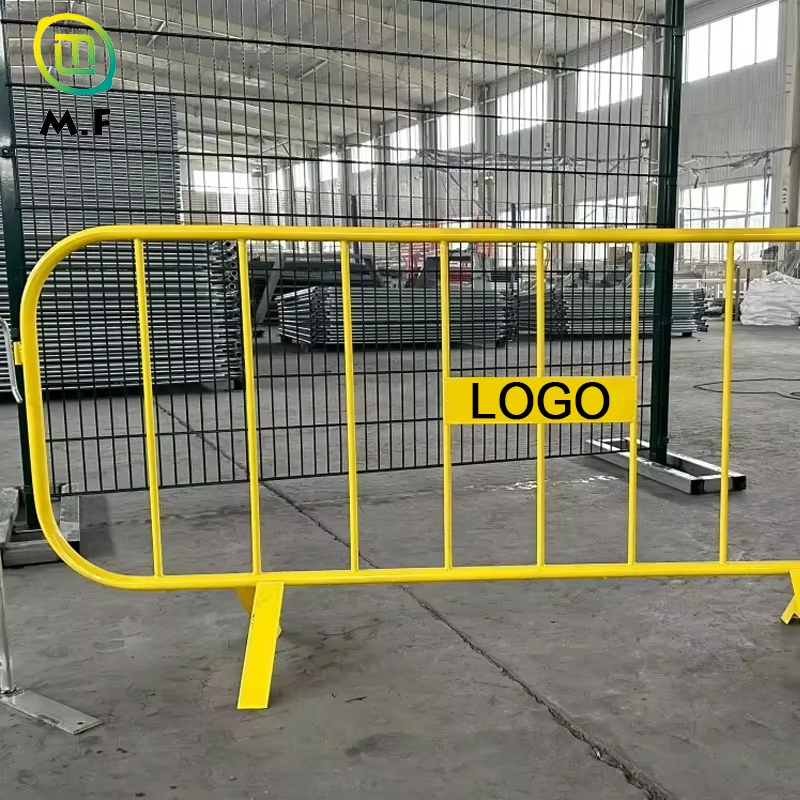
Core Functional Differences: Crowd Control vs. Perimeter Security
Barricades and temporary fence solutions serve fundamentally distinct purposes in professional environments. Barricades specialize in dynamic crowd management, creating visible, temporary boundaries that guide pedestrian flow and prevent overcrowding at events, queues, or high-traffic zones. Their design prioritizes rapid deployment, interlocking stability, and directional control—often featuring heights exceeding 1 meter for enhanced visibility. In contrast, temporary fence systems focus on establishing secure, fixed perimeters for construction sites, asset protection, or restricted areas. These solutions emphasize durability, wind resistance, and long-term stability—typically anchored to the ground—to deter unauthorized access and protect assets over extended durations. While barricades excel in scenarios requiring reconfiguration and mobility, temporary fences provide persistent boundary integrity where perimeter security is non-negotiable. This functional divergence dictates their respective applications: barricades manage human movement; fences protect static assets.
Context-Specific Applications: Events, Construction Sites, and Emergency Response
Event Management: Modular barricades for dynamic crowd flow and VIP access control
For large-scale events, modular barricades offer unmatched adaptability. They can be rapidly reconfigured to create entry gates, queue lanes, or secure backstage zones—enabling real-time adjustments as crowd density or flow patterns shift. Their high visibility and sturdy build help guide crowds without causing bottlenecks, while steel-reinforced models withstand significant pressure during protests or peak attendance. Unlike fixed fencing, barricades can be moved or adjusted in minutes by small crews, making them indispensable for maintaining orderly flow and protecting VIP areas.
Construction & Infrastructure: Temporary fence for long-term site containment and regulatory compliance
Construction sites demand durable, long-lasting perimeter solutions. Temporary fence systems are engineered to withstand weather exposure, theft attempts, and accidental impacts over weeks or months. Galvanized steel mesh panels resist corrosion, maintain structural integrity, and meet OSHA 2024 standards for wind resistance (up to 50 mph with deep-footed base plates). Their continuous barrier design eliminates climbable footholds, while mesh transparency supports visual monitoring—key for unattended equipment yards or active job sites. Procurement teams select these systems not just for physical security but to satisfy safety regulations, liability requirements, and insurance mandates tied to site containment.
Operational Trade-Offs: Mobility, Visibility, and Installation Requirements
Barricades: Rapid deployment, high-impact resistance, and reconfigurability
Barricades deliver superior mobility for dynamic security needs. Their lightweight, interlocking designs enable swift setup and repositioning—requiring no mechanical anchoring—and allow instant reconfiguration of pathways, queues, or restricted zones without tools. High-visibility colors enhance crowd awareness and reduce accidental breaches. Steel-reinforced models provide reliable physical deterrence under crowd pressure, making them ideal for evolving situations where layout changes occur frequently—such as festival staging or emergency evacuation corridors.
Temporary fence: Fixed perimeter integrity, weather resilience, and theft deterrence
Temporary fencing prioritizes long-term perimeter security through fixed anchoring systems. Its galvanized steel mesh resists corrosion from prolonged outdoor exposure, and deep-footed base plates prevent lifting or toppling under high wind loads—meeting OSHA 2024 performance benchmarks. The continuous barrier design eliminates climbable footholds, while mesh transparency enables passive visual monitoring. These features collectively create persistent theft deterrence for unattended construction sites or equipment storage yards. Though installation requires mechanical anchoring, the result is uncompromising boundary definition that remains effective across multi-month deployments.
Selecting the Right Solution: A Decision Framework for Procurement Teams
Procurement teams evaluating barricades versus temporary fence solutions must weigh four key factors: duration of use, required security level, crowd control complexity, and installation constraints. For short-term events requiring rapid reconfiguration—such as festivals or VIP zones—steel barricades offer superior mobility and impact resistance. Conversely, construction sites needing multi-month perimeter security benefit from temporary fence systems with their fixed integrity and theft-deterrence capabilities. Projects under two weeks typically favor barricades; longer durations justify fence investments. Security needs further refine selection: high-pressure crowds demand barricades’ visible rigidity, whereas low-traffic asset storage suits fence cost-efficiency. Installation speed comparisons reveal barricades deploy 70% faster for dynamic layouts, though fences maintain a decisive advantage in wind resistance above 35 mph (NOAA 2023). Ultimately, matching solution traits to documented site requirements prevents 83% of post-installation change orders, according to event safety audits.
FAQ
What is the main difference between barricades and temporary fencing?
Barricades are designed for dynamic crowd management, guiding pedestrian flow and preventing overcrowding, while temporary fencing focuses on establishing secure, fixed perimeters to protect assets and deter unauthorized access over extended durations.
Which solution is better for short-term events?
For short-term events requiring rapid deployment and reconfiguration, barricades are more suitable due to their mobility and ability to adapt quickly to changing layouts.
Why are temporary fences preferable for construction sites?
Temporary fences provide durable, long-term perimeter security with fixed anchoring systems, wind resistance, theft deterrence, and compliance with regulatory requirements, making them ideal for construction sites.
Are barricades easier to install than temporary fencing?
Yes, barricades typically require no mechanical anchoring and can be set up 70% faster than temporary fencing, making them ideal for dynamic layouts and situations requiring frequent adjustments.
How do procurement teams choose between barricades and fences?
Procurement teams consider factors like duration of use, security level, crowd control needs, and installation constraints to select between barricades and fences, ensuring the chosen solution matches project requirements effectively.