
 EN
EN
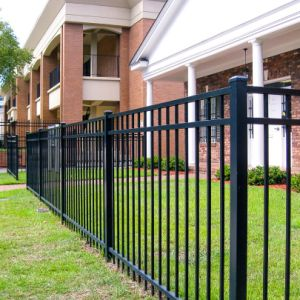
The Challenge of Sloped Terrain for Fence Installation
Installing outdoor fence panels on flat ground is straightforward: set posts at equal depth along a level line, and the top rail runs parallel to the ground. On a 10% slope, everything changes. Equal-depth posts produce a diagonal top line that may violate height ordinances at the downhill end and leave a triangular gap under the uphill end where animals pass freely. Solving this requires choosing between stepped and racked installation methods.
Why Flat-Ground Methods Fail on a Slope
Outdoor fence panels are manufactured as rigid rectangles — the top and bottom rails are parallel, and the panel cannot twist without distorting the frame. When placed between posts at different elevations, a rigid panel forces one of four outcomes: a gap underneath, stepped sections, a stressed panel at angled brackets, or labor-intensive panel cutting. Understanding that panel fencing differs fundamentally from chain-link on slopes is the first planning step.
Real-World Case — A Residential Property with a 15% Grade
A UK homeowner needed 40 meters of powder-coated galvanized steel outdoor fence panels along a side boundary sloping at approximately 15% — a 1.5-meter drop over 10 meters of horizontal run. Setting all posts at equal height above ground would have produced a 1.4-meter fence at the downhill end and a 0.8-meter fence uphill, with the downhill height exceeding local planning permission limits for boundary fencing. The installer used the stepped method: each post was set at 1.2 meters above the ground directly below it, panels mounted in 2-meter-wide level sections, with each section stepping down approximately 300 mm from the previous. The bottom of each panel sat close to the ground, eliminating gaps, and the stair-step top line was visually consistent with the terraced garden it bordered. Maifa Metal Products supplies galvanized steel fence panels with secure post-bracket attachment that supports stepped installation without panel deformation or structural stress.
Two Installation Methods for Sloped Ground
Stepped vs. Racked — Which Method for Which Fence Type
The stepped method installs outdoor fence panels in level horizontal sections descending incrementally — the only viable method for rigid panel fencing. Each post is set to the same height above the ground beneath it, and panels mount at equal elevation. The stepped method creates a visible stair-step profile but maintains full panel integrity. The racked method angles the fence to follow the ground — suitable for chain-link, welded wire mesh, and flexible wood designs where material pivots at post attachments.
Panel-Specific Considerations for Slope Installation
Rigid Panels, Post Spacing, and Ground Clearance
Rigid metal outdoor fence panels — including galvanized steel, aluminum, and powder-coated panel systems — must use the stepped method exclusively. Attempting to rack a rigid panel by forcing it to follow the ground contour stresses the welded joints at the corners, deforms the frame, and creates uneven gaps between the panel and the posts that compromise both security and appearance. Post spacing on a slope requires more posts than on flat ground because the horizontal distance between post centers shortens as the gradient steepens. Ground clearance under each stepped panel section should be minimized — ideally 25 mm to 50 mm on turf or soil — to prevent animals from digging underneath. On uneven ground at the base of a stepped section, a gravel board or concrete haunch fills the gap to maintain security.
Planning a Slope Fence Installation
Five Steps to a Successful Project
First, survey the slope — measure gradient as percentage (rise ÷ run × 100) along the entire line. Second, determine post positions and heights — mark each location and calculate ground-to-top height for consistent fence height. Third, select the installation method — stepped for rigid panels, racked for flexible types. Fourth, order additional material — 10% to 15% more posts. Fifth, begin at the highest point and work downhill. Maifa provides outdoor fence panels in a range of heights and widths supporting efficient stepped installation.
Frequently Asked Questions
Can outdoor fence panels be installed on a slope?
Yes, outdoor fence panels can be installed on sloped terrain using the stepped method — each panel section mounted level with successive sections descending. Maifa Metal Products fence panels are compatible with stepped installation, preserving panel integrity and eliminating under-fence gaps.
What is the difference between stepped and racked fence installation?
Stepped installation mounts outdoor fence panels in level sections descending in increments — the only method for rigid panels. Racked installation angles fencing material to follow the ground contour — suitable for chain-link and flexible wire mesh.
Will a stepped fence leave gaps under the panels?
A properly stepped outdoor fence panels installation minimizes gaps by setting each post to the same height above the ground directly below it. Where uneven ground creates small gaps beneath a panel section — typically under 50 mm — gravel boards or concrete haunches fill the space. Gaps exceeding 50 mm may require a retaining board or additional ground preparation before the next panel section is mounted.
Does a sloped fence require more posts?
Yes. The horizontal distance between posts shortens on a slope, so a sloped outdoor fence panels installation typically needs 10% to 15% more posts. The steeper the slope, the more additional posts required.
Which fence materials work best on slopes?
Rigid metal outdoor fence panels — galvanized steel, aluminum, powder-coated steel — work well with the stepped method. Flexible systems — chain-link, welded wire, wood pickets — can use either stepped or racked installation.
How steep a slope can outdoor fence panels accommodate?
Outdoor fence panels using the stepped method can accommodate slopes up to approximately 30% (3-meter drop per 10 meters). Beyond 30%, step increments become visually prominent and retaining walls or terracing may be needed first.