
 EN
EN
Compliance-Driven Procurement of Security Fencing: A Buyer's Checklist for Regulated Markets
When importing high-security fencing products — whether 358 anti-climb mesh for a prison perimeter, Canada-style temporary panels for a federally regulated construction site, or CE-marked steel fencing for an EU infrastructure tender — the gap between a smooth transaction and a costly customs hold often comes down to one factor: documentation readiness before the container leaves the factory.
At Maifa Fencing, we have shipped fencing products to over 100 countries across North America, Europe, Oceania, and Southeast Asia. This article shares practical insights buyers can use to evaluate suppliers, verify compliance, and de-risk their procurement, covering key product categories that face heightened regulatory scrutiny at the point of import.
1. Why Compliance Matters More for Certain Fencing Categories
Not all fencing imports carry the same level of customs exposure. The following three product groups typically require additional scrutiny:
| Product Category | Typical End-Use | Key Regulatory Exposure |
| 358 Anti-Climb / High-Security Fencing | Prisons, military bases, airports, critical infrastructure | Material traceability, anti-cut test reports, galvanizing thickness certificates |
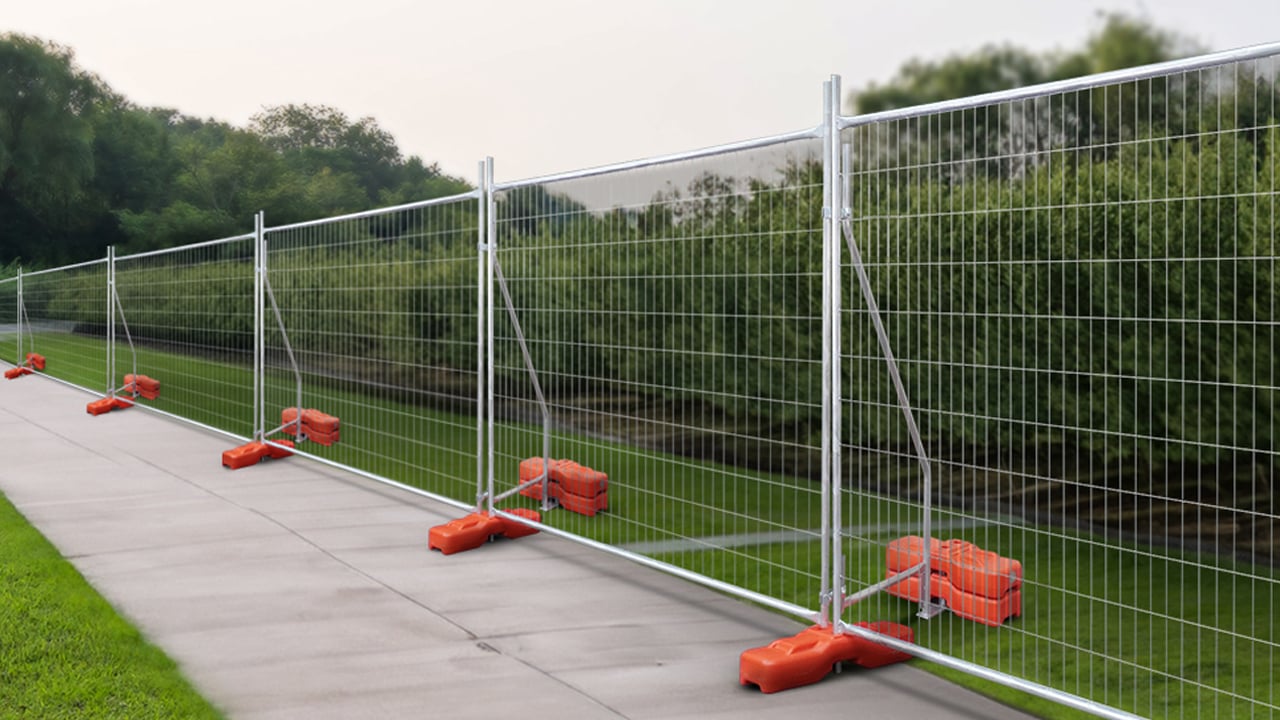
| Country-Specific Temporary Fencing (e.g., Canada-style, Australia-style) | Government / municipal construction sites, public events | Destination-country dimensional and base-plate standards, coating specifications |
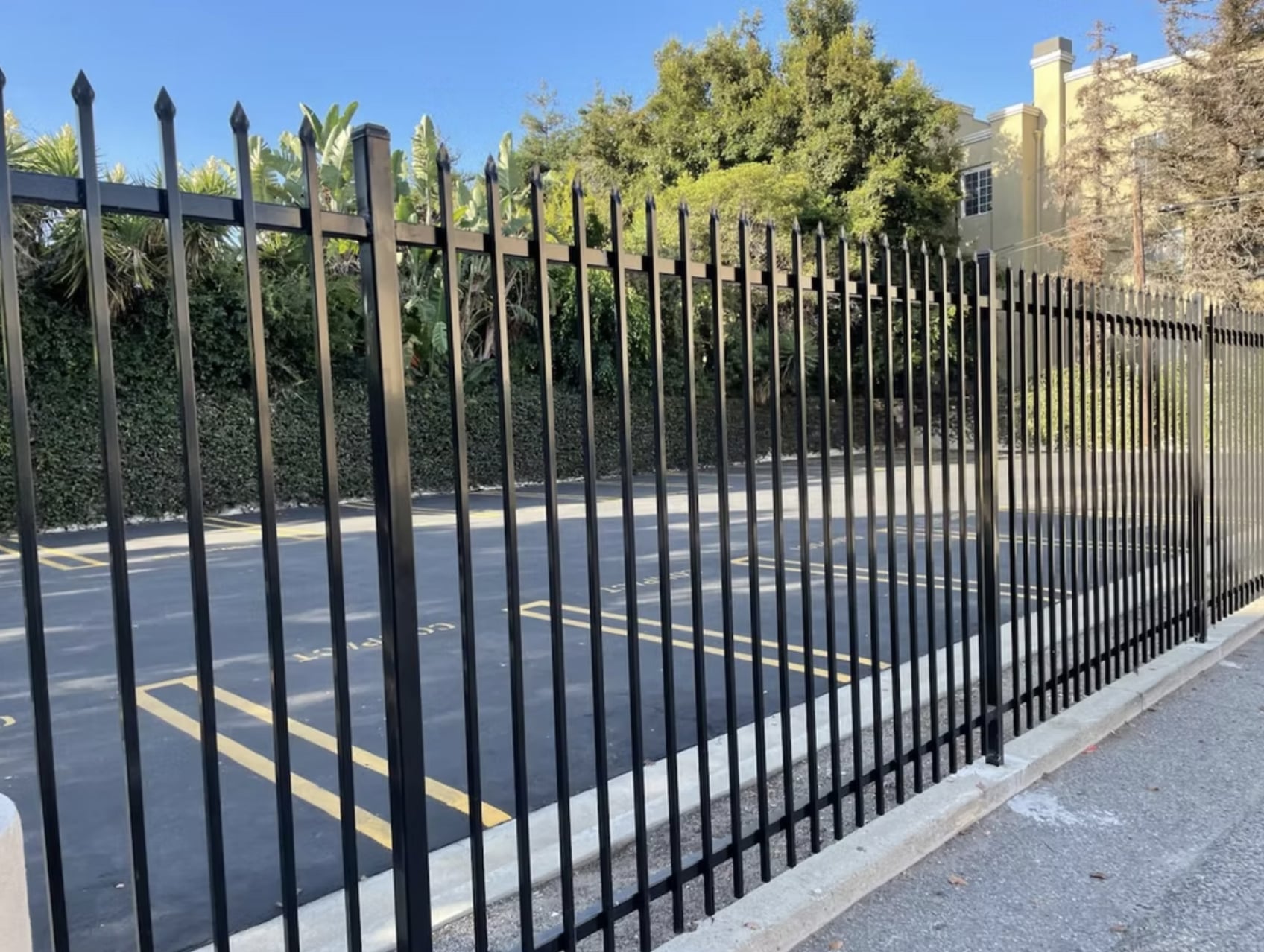
| CE-Marked Permanent Fencing (steel / wire mesh panels for EU markets) | Schools, public parks, commercial perimeters | EU Construction Products Regulation (CPR), Declaration of Performance (DoP), EN standards compliance |
For buyers in these categories, verifying a supplier's compliance readiness before placing an order is not optional — it is the most direct way to avoid demurrage charges, rejected shipments, or contract penalties.
2. Application Scenarios and Product Specifications
2.1 358 Anti-Climb Security Fencing
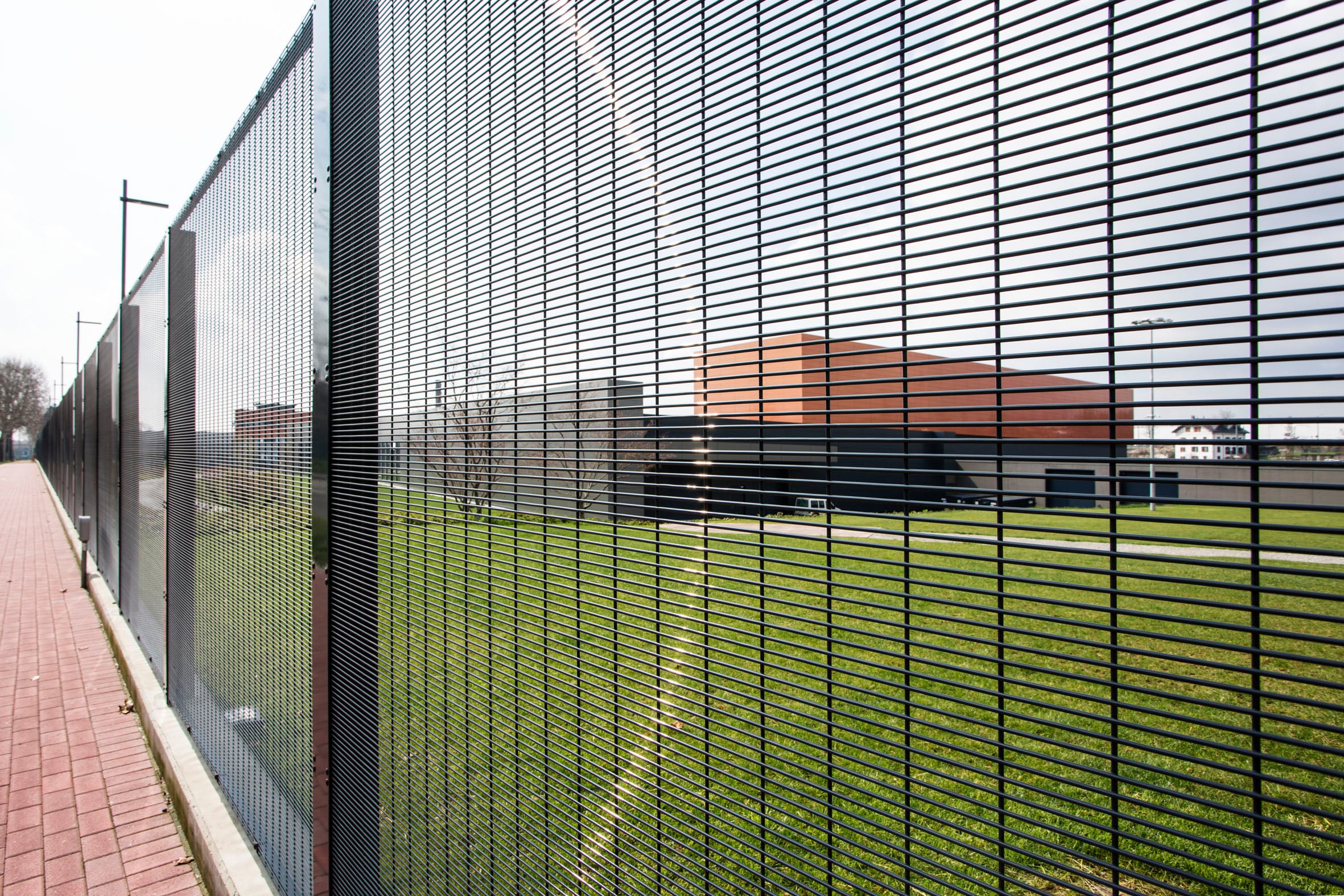
358 fencing (named for its 3″×0.5″ mesh aperture) is specified where anti-cut, anti-climb, and clear visibility are mandatory. The mesh openings are too small for finger or toe holds, and the 4 mm wire diameter resists bolt cutters and hand tools.
Typical applications:
- Prison and correctional facility perimeters
- Military base boundary walls
- Airport runway and fuel-farm security
- Data center and substation enclosures
- High-value warehouse and logistics hub fencing
Standard specification range (Maifa):
| Parameter | Value |
| Wire diameter | 4.0 mm |
| Mesh opening | 76.2 mm × 12.7 mm |
| Panel width | 2,000–3,000 mm |
| Panel height | 1,000–2,500 mm |
| Post options | 60×40 / 60×60 / 60×80 / 80×80 mm (1.5–3.0 mm wall) |
| Surface treatment | Hot-dip galvanized + polyester powder coat (RAL custom) |
| Optional add-ons | Barbed wire / razor coil cradles, Y-arms, alarm integration brackets |
2.2 Canada-Style and Australia-Style Temporary Fencing
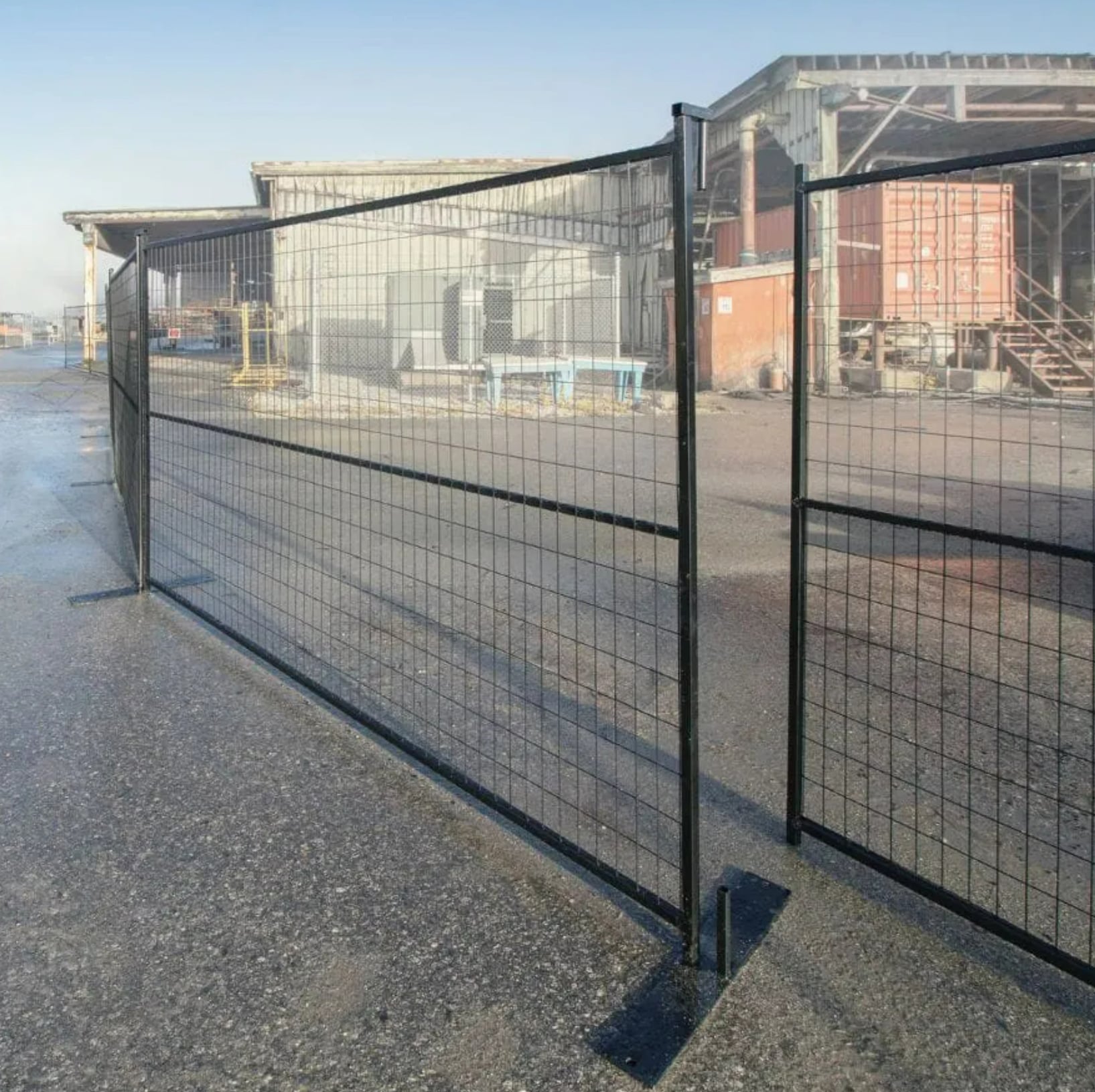
Temporary fencing for North American and Australian markets must conform to region-specific dimensional and structural standards, particularly around base-plate design, panel height × width ratios, and wind-load performance.
Typical applications:
- Federally funded construction site perimeter control
- Municipal roadwork and utility project barriers
- Public event crowd management (stadiums, festivals)
- Emergency / disaster response zone demarcation
Standard specification range (Maifa):
| Parameter | Canada Style | Australia Style |
| Panel height | 6 ft (1.83 m) | 1.8–2.1 m |
| Panel width | 9.5–10 ft (2.9–3.05 m) | 2.1–2.4 m |
| Frame tube | 25 mm OD | 25×25 / 32 mm OD |
| Infill mesh | 50×100 mm or 50×50 mm | 50×100 mm or 50×50 mm |
| Base | Welded stand base with ground stake holes | Weighted / flat base plate |
| Coating | Pre-galvanized + powder coat | Hot-dip galvanized + powder coat |
3. The Compliance Document Checklist for Importers
Before confirming a purchase order, buyers should request and review the following documentation package from their supplier. At Maifa, we provide this as a standard pre-shipment dossier for regulated-market orders:
Core Certifications (Factory Level)
| Document | What to Check |
| ISO 9001:2015 certificate | Verify the issuing body and validity period. Confirms a documented quality management system is in place. |
| CE marking certificate (EU-bound) | Check product scope matches your order. CE is product-specific, not a blanket factory credential. |
| Third-party test reports (e.g., SGS, TÜV, Intertek) | Look for: coating thickness (µm), adhesion test (cross-hatch or pull-off), salt-spray resistance (hours), galvanizing weight (g/m²). |
Product-Specific Documents
| Document | Why It Matters |
| Mill Test Certificate (MTC) | Verifies the chemical composition and mechanical properties of the base steel (Q195/Q235). Required for structural integrity in security applications. |
| Batch inspection report | Documents dimensional tolerances, weld integrity, and surface defects for each production lot. |
| Coating test report | Confirms zinc coating weight (≥80 g/m² for hot-dip galvanized), powder coating thickness (typically 60–120 µm), and adhesion grade. |
Shipment and Labeling
| Document | What to Check |
| Packing list with HS codes | Accurate HS classification is critical for customs clearance. Work with your broker to confirm the code before shipment. |
| Pallet / bundle labeling | Each pallet should carry: product name, panel dimensions, quantity, batch number, production date, destination port, and net/gross weight. |
| Container loading plan | Photographic record of how goods were loaded, including dunnage and edge protection. Useful for insurance claims if transit damage occurs. |
4. Procurement FAQ: What Buyers Often Overlook
Q1: Do I need a third-party inspection before shipment?
If your contract specifies minimum coating thickness, weld strength, or dimensional tolerances — and especially if payment is tied to a Letter of Credit — a pre-shipment inspection (PSI) by SGS, Bureau Veritas, or a similar body adds a layer of risk control. At Maifa, we accommodate third-party inspections at our Anping factory on request.
Q2: What happens if the HS code is wrong?
An incorrect HS code can trigger reclassification at customs, leading to back-duties, penalties, or seizure. Always confirm the code jointly with your supplier and your customs broker before the Bill of Lading is issued. We share proposed HS codes during the quotation stage so buyers can validate them independently.
Q3: Can the packaging and labeling be customized to comply with destination-country rules?
Yes. This is a standard service for regulated-market shipments. Common requests include:
- ▪ Bilingual labels (e.g., English + French for Canada)
- ▪ Importer-of-record details printed on each bundle
- ▪ Country-of-origin marking compliant with the destination's format
- ▪ Pallet dimensions matched to regional warehouse racking systems
Any labeling or packaging requirement should be communicated before production begins to avoid rework delays.
Q4: What coating specification should I specify for coastal or high-humidity environments?
For coastal installations (ports, offshore platforms, seaside substations), specify hot-dip galvanizing with a zinc coating of ≥120 g/m², followed by a marine-grade polyester powder coat. Standard 80 g/m² galvanizing may not provide sufficient service life in salt-spray conditions. Request a salt-spray test report (ASTM B117) if the end-use environment warrants it.
Q5: How long does certification documentation remain valid?
Certifications like ISO 9001 and CE are subject to annual surveillance audits and typically expire after 3 years from the issue date. Always request the most recent certificate. For batch-specific documents (MTC, coating test reports), each shipment should carry fresh reports tied to that production lot.
5. Buyer Risk Control: Four Practical Steps
1. Verify certification authenticity. Reverse-look up the certificate number on the issuing body's public database (e.g., ISO certificate registries, EU Notified Body portals). Do not rely solely on a PDF from the supplier.
2. Sample before volume. For security-grade products, order a small sample shipment (even 10–20 panels) to verify physical quality, coating performance, and packaging durability in transit before committing to full containers.
3. Inspect at source. If the order value exceeds a threshold that justifies the cost, send your own QC representative or retain a third-party inspector to witness production and pre-loading checks. A single container rejection at destination is far more expensive than the inspection fee.
4. Audit the paper trail. Before releasing the balance payment, confirm you have received: (a) signed commercial invoice, (b) packing list, (c) Bill of Lading copy, (d) certificate of origin, (e) all applicable test reports and certifications, and (f) container loading photos. Missing any one of these can delay customs clearance by days to weeks.
6. About Maifa Fencing
Hebei Maifa Metal Products Co., Ltd. is an ISO 9001:2015-certified manufacturer based in Anping County, China, with over 15 years of experience in wire mesh and fencing production. Our 133,200 m² factory houses 10 automated production lines and serves buyers in 100+ countries.
We hold CE certification, SGS-tested product reports, and a documented quality management system that covers raw material traceability, in-process inspection, and pre-shipment audit.
Our regulated-market product portfolio includes:
- ▪ 358 Anti-Climb Security Fencing
- ▪ Canada-Style Temporary Fencing
- ▪ Australia-Style Temporary Fencing
- ▪ Double Wire / 3D Wire Mesh Fencing
- ▪ Steel Fence Panels (multiple top styles)
Start Your Compliant Procurement
If you are sourcing security fencing for a regulated project, we recommend starting with a documentation pre-check. Contact our team with your project specifications, and we will provide:
- ▪ A preliminary compliance assessment for your destination market
- ▪ Relevant certificates and sample test reports
- ▪ A tailored quotation with lead time and shipping options
Email: [email protected]
WhatsApp: +86-18131189696
Website: www.fenceswiremesh.com
Disclaimer: This article provides general procurement guidance. Buyers should independently verify all regulatory requirements with their customs broker and local authority prior to import.


